


Walk through most CBSE schools in south Bangalore around late August and into September, and you’ll likely see the same thing: a Ganesh idol being decorated in one corner, echoes of Onam celebrations still lingering from a few weeks earlier, and children from a dozen different linguistic and regional backgrounds all somehow part of the same classroom community.
South Bangalore, particularly the corridor around Kengeri, Uttarahalli, and Mysore Road, has become home to families from across India, drawn here by the city’s IT and tech industries. This means a genuinely diverse student body has become the norm, not the exception, and how a school handles that diversity says a lot about the environment your child is actually growing up in.
Why This Diversity Is Worth Paying Attention To
It’s easy to take a mixed-background classroom for granted, especially in a city like Bangalore where this has become increasingly common. But it’s worth recognising what a genuine opportunity this represents, and also what it requires a school to get right.
A child growing up alongside classmates who celebrate different festivals, speak different home languages, and follow different family traditions is building, almost by default, a kind of everyday familiarity with difference that’s genuinely valuable in an increasingly interconnected world. This doesn’t happen automatically just because a classroom happens to be diverse — it depends on how a school actively shapes that environment.
What Genuine Cultural Inclusion Looks Like, Beyond a Festival Calendar
Many schools mark a wide range of festivals on their calendar — Ganesh Chaturthi, Onam, Diwali, Eid, Christmas, Pongal, and others — which is a reasonable starting point. But genuine inclusion goes further than simply noting these dates or organising a related craft activity.
Are festivals explained with genuine context, not just decoration? A meaningful celebration helps children understand why a festival matters to the families who celebrate it, not just what it looks like visually. This builds real understanding rather than a superficial, purely visual sense of “different cultures have different colourful things.”
Are children from minority backgrounds within the school genuinely included, not just accommodated? This is a subtle but important distinction. Accommodation might mean simply excusing a child from a specific activity that doesn’t fit their family’s practices. Genuine inclusion means actively creating space for that child’s own background to be represented and celebrated too, not just tolerated around the edges of a majority celebration.
Is there space for children to share their own family’s specific traditions? Even within broadly similar festivals, family practices vary enormously — different regional variations of Ganesh Chaturthi, different specific Onam traditions depending on which part of Kerala a family traces back to. Genuine inclusion makes room for this individual variation, not just a single standardised version of each festival.
How are non-Hindu festivals and non-religious families treated? A genuinely inclusive school gives meaningful, comparable attention to Eid, Christmas, and other traditions represented in its community, and is thoughtful about how children from non-religious or differently-religious families experience festival-heavy periods of the school calendar.
Why This Matters Especially in a Linguistically Diverse City Like Bangalore
South Bangalore’s classrooms increasingly include children whose families speak Tamil, Telugu, Malayalam, Hindi, Bengali, Marathi, and dozens of other languages at home, alongside Kannada as the local state language and English as the primary medium of instruction.
This linguistic diversity is a genuine strength, but it also requires thoughtful handling, particularly in the early years when language development is still forming. Ask how the school supports children whose home language differs from the medium of instruction, and whether local language learning, typically Kannada or Hindi as per CBSE requirements, is taught in a way that’s accessible and welcoming to children who may be encountering that specific language for the first time at school.
How Festival Celebrations Can Build Real Understanding, Not Just Novelty
A well-designed festival celebration does more than mark an occasion on the calendar. It’s a genuine opportunity to build cross-cultural understanding among children, if approached thoughtfully.
This might look like inviting children to briefly share how their own family celebrates a particular festival, surfacing the genuine variety that exists even within what looks, from the outside, like a single shared celebration. It might look like connecting a festival’s underlying themes — gratitude, renewal, community, light overcoming darkness — to universal human experiences that resonate across different specific traditions, building bridges of understanding rather than simply presenting each festival as a separate, disconnected curiosity.
It’s also worth schools being thoughtful about how much classroom time and resources go toward festival celebrations relative to core academic content, striking a genuine balance rather than either extreme — dismissing cultural celebration as unimportant, or letting it consume disproportionate instructional time.
Helping Your Own Child Navigate a Diverse Classroom
Beyond what the school does, there’s real value in how you frame and support this diversity at home too, particularly if your family’s own background differs meaningfully from the majority in your child’s specific classroom.
Talk openly and positively about difference, rather than treating it as something to navigate carefully or avoid discussing. Children pick up discomfort from adults far more readily than genuine, comfortable curiosity, and a simple, matter-of-fact approach to discussing different traditions tends to produce children who are similarly comfortable and curious themselves.
Encourage your child to ask genuine questions of classmates from different backgrounds, within reasonable social boundaries, rather than assuming this is impolite or intrusive. Most families are genuinely happy to share their traditions when asked with real curiosity and respect.
Share your own family’s specific traditions with confidence, even if they differ from what’s more commonly represented at school. A child who sees their own family’s practices treated with the same respect and interest as anyone else’s builds genuine confidence in their own identity, alongside openness to others’.
If your family doesn’t observe many of the festivals commonly celebrated at school, it’s worth having an open conversation with your child about this too, helping them understand that different families make different choices, without framing it as something to feel uncomfortable or defensive about.
A Real Scenario Worth Recognising
Consider a common situation in south Bangalore’s classrooms: a family recently relocated from Kerala for a parent’s tech job finds their child is the only one in the class who observes Onam in a particular way, while most classmates are more familiar with Ganesh Chaturthi given the school’s broader regional context.
A thoughtful teacher, noticing this, might invite the child to briefly share something about their family’s Onam celebration with the class, framing it as a genuine addition to the classroom’s collective understanding rather than treating the child’s experience as a footnote to the more locally dominant celebration.
This small gesture matters more than it might initially seem. For the child, it’s a validating experience of their own family’s identity being seen and valued. For classmates, it’s a genuine, memorable introduction to a tradition they might not otherwise encounter meaningfully. Multiplied across many such small moments throughout a school year, this is what genuine cultural inclusion actually looks like in daily practice, far more than any single large, calendar-marked celebration.
Navigating Festival Season Without Academic Disruption
It’s worth acknowledging a practical parental concern directly: with so many festivals falling across the August-to-October stretch, is there a risk that academic momentum gets genuinely disrupted by celebration after celebration?
A well-run school manages this balance thoughtfully, integrating festival-related activities into existing curriculum time where possible — a Ganesh Chaturthi craft activity that also builds fine motor skills, an Onam-related discussion that ties into a social studies unit on regional diversity — rather than treating each celebration as a separate, disruptive break from core instruction.
If you notice academic momentum genuinely suffering during a particularly festival-dense stretch of the calendar, it’s a reasonable thing to raise with the school, distinguishing this practical, scheduling-related concern from any question about the value of cultural celebration itself, which are really two separate issues worth discussing separately.
How Siblings From Different Cultural Backgrounds Navigate This Together
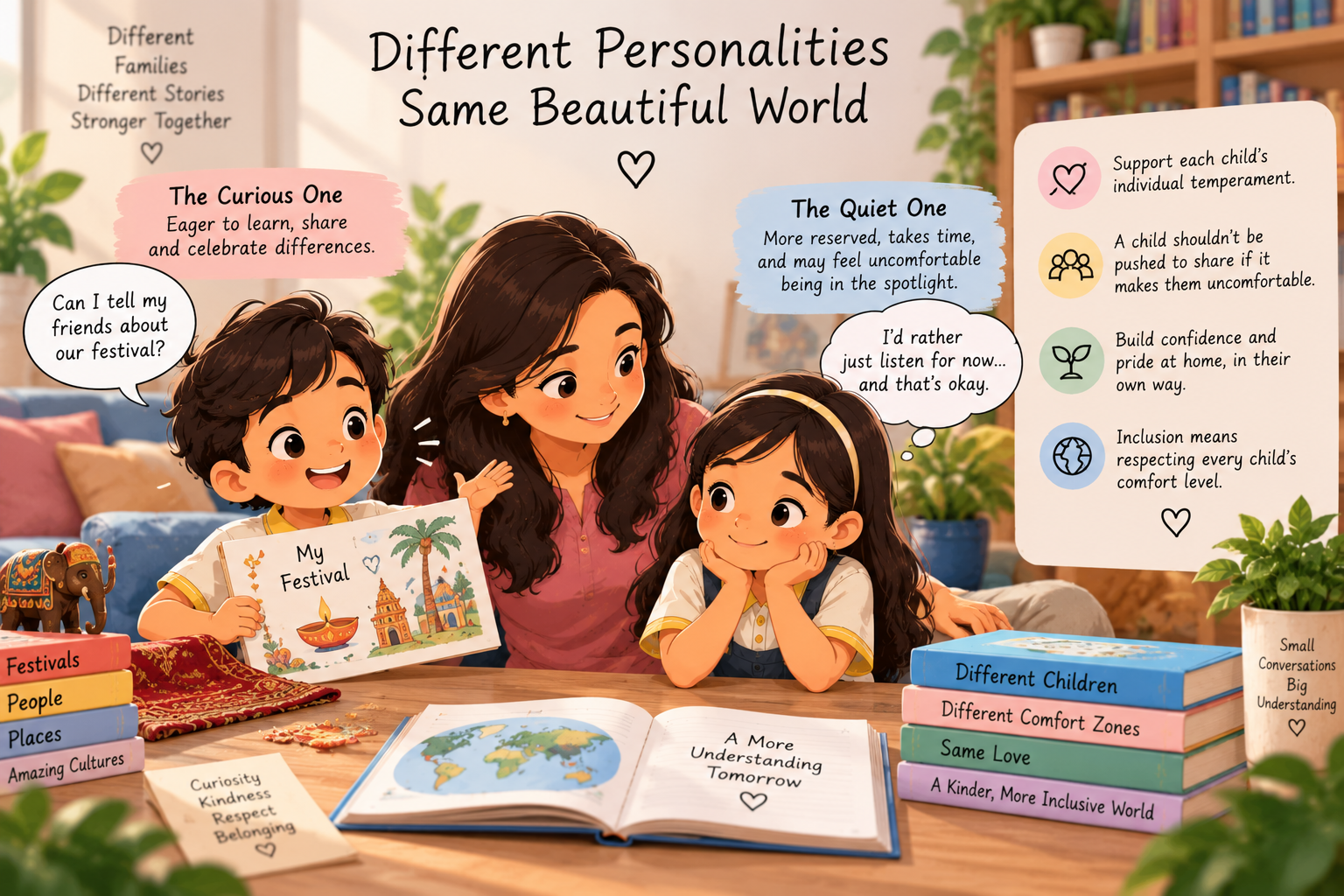
For families where siblings might respond differently to the same classroom diversity — one child naturally curious and eager to share their own traditions, another more reserved or even slightly uncomfortable being singled out as “different” — it’s worth tailoring your support to each child’s individual temperament rather than assuming a one-size-fits-all approach to encouraging cultural sharing.
A more reserved child shouldn’t be pushed to share or represent their family’s traditions publicly if this genuinely makes them uncomfortable, even while you continue building their private confidence and pride in their own family’s identity at home. Genuine inclusion respects a child’s own comfort level with visibility, not just their family background itself.
What to Do If You Notice Genuine Insensitivity
Occasionally, despite a school’s best intentions, specific moments of insensitivity or exclusion do happen — a comment from another child, an activity that inadvertently excludes a particular family’s practices, a well-meaning but poorly executed attempt at inclusion that actually falls flat.
If this happens, raise it directly and specifically with the school, sharing exactly what occurred rather than a general sense of discomfort. A school genuinely committed to inclusion will take this seriously and adjust; how they respond to a specific, well-articulated concern tells you a great deal about whether their stated commitment to diversity is genuinely lived or largely superficial.
Why This Connects to Broader Character and Values Education
This topic connects directly to the broader values education themes covered in our companion guide on Independence Day and character building — genuine cultural inclusion is, at its core, an exercise in empathy, respect, and understanding across difference, the same underlying qualities that broader character education aims to build.
A school that handles festival diversity thoughtfully is very often the same kind of school that handles other forms of difference — different learning styles, different family structures, different socioeconomic backgrounds — with similar thoughtfulness and care, since the underlying institutional commitment to genuine inclusion tends to show up consistently across many different dimensions, not just around festival season specifically.
What This Looks Like at Marigold International School
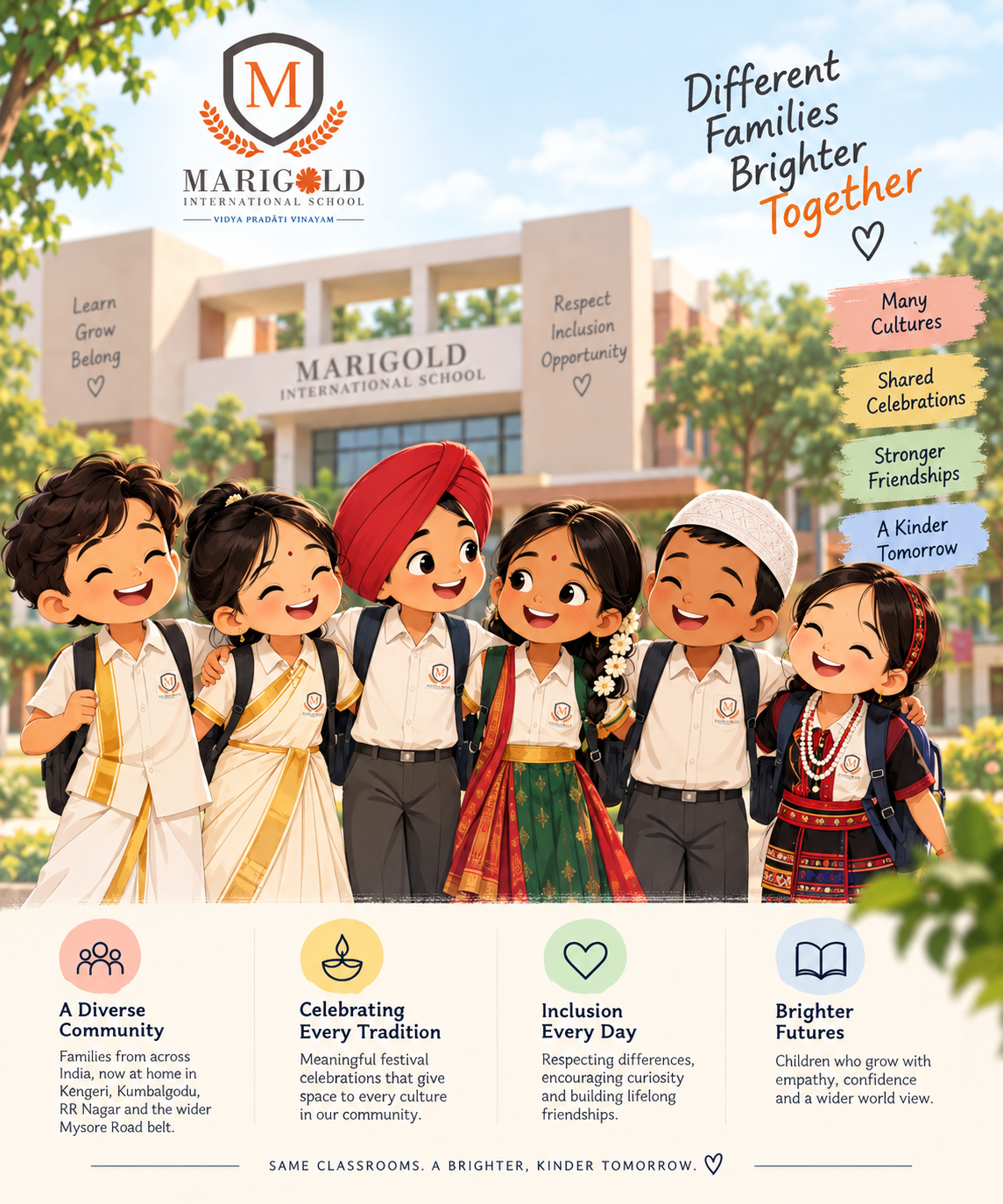
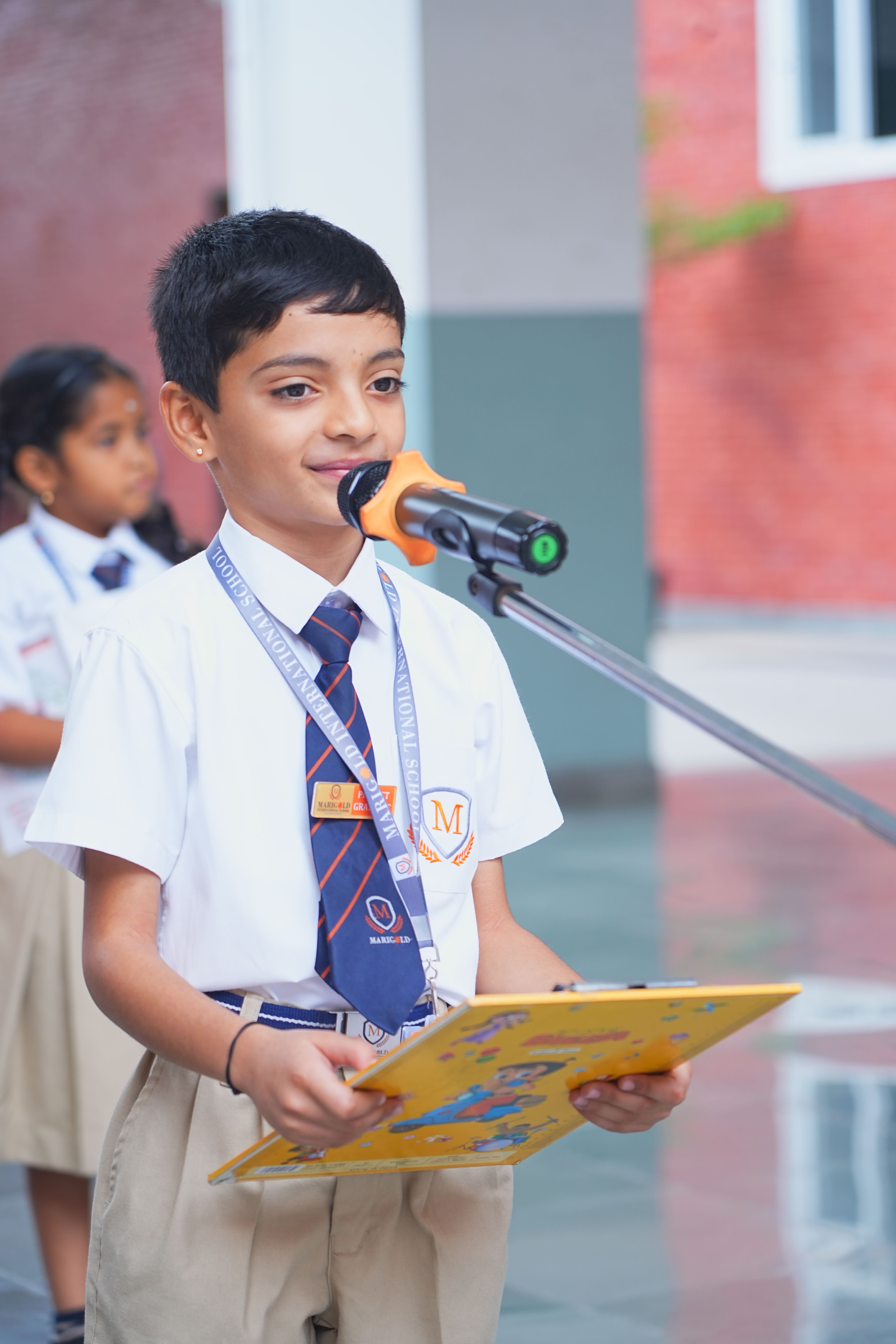
Marigold International School’s community reflects the genuine diversity of families now living across Kengeri, Kumbalgodu, RR Nagar, and the wider Mysore Road belt, many of whom have relocated to Bangalore from across India for work.
The school’s approach to festival celebrations and cultural inclusion aims to give meaningful, genuine attention to the range of traditions represented within its own student community, treating this diversity as a genuine strength to be celebrated actively, not simply accommodated quietly.
For families evaluating schools with this specifically in mind, it’s worth asking directly during a visit how the school approaches festival celebrations across its full calendar, and how it supports children and families whose backgrounds might differ from the local majority.
Frequently Asked Questions
How can I tell if a school’s approach to cultural diversity is genuine versus superficial? Ask specific questions about how festivals beyond the most commonly celebrated ones are handled, how children from minority backgrounds are included rather than just accommodated, and listen for concrete, specific examples rather than general statements about “celebrating diversity.”
Should I be concerned if my family’s specific traditions aren’t widely represented at my child’s school? It’s worth raising this directly and constructively with the school, many of which are genuinely receptive to expanding their approach when a specific, underrepresented tradition is brought to their attention by an interested family.
How young is too young to start having conversations about cultural and religious diversity? Even young children can engage with simple, concrete concepts of difference and respect, appropriate to their age, and early, comfortable exposure to this kind of conversation tends to build more genuine openness than waiting until children are older.
What if my child comes home with questions about a festival or tradition I’m not familiar with myself? This is a genuinely good opportunity for both of you to learn together, rather than needing to have all the answers yourself. Looking something up together, or simply saying “let’s find out together,” models genuine curiosity as a lifelong habit.
How does festival diversity in the classroom connect to academic learning? Beyond its social and emotional value, genuine cultural literacy connects meaningfully to social studies curriculum, language learning, and broader critical thinking skills, making this far from a purely extracurricular concern.
A Final, Honest Note
South Bangalore’s classrooms today look genuinely different from what many parents experienced growing up, shaped by decades of migration into the city’s tech corridor and the genuine diversity that’s brought along with it.
This is worth seeing as a real strength, not just a logistical complexity for schools to manage. A child who grows up genuinely comfortable with difference, who has celebrated Onam alongside a Malayali classmate and Ganesh Chaturthi alongside a Maharashtrian one, is building something valuable that no textbook could teach as effectively.
One last practical tip: the next time a festival your family doesn’t personally celebrate comes up at school, use it as a genuine learning opportunity at home too, asking your child what they learned and showing real interest in the answer. This models exactly the kind of curious, respectful engagement with difference you’d want your child to carry into adulthood.
Why This Prepares Children for a Genuinely Global Future
It’s worth stepping back and considering the longer-term value of this kind of everyday, lived exposure to difference, beyond just making the current school years pleasant and inclusive.
Many children growing up in south Bangalore’s tech-adjacent families will go on to study, work, or live in genuinely diverse environments themselves, whether in another Indian city, another country, or simply within Bangalore’s own increasingly cosmopolitan professional world. The comfort with difference built through years of genuinely diverse, well-handled classroom experience becomes a real, practical asset in these future contexts, not just a pleasant feature of childhood.
This is, in many ways, one of the underappreciated advantages of growing up in a city and a school community as genuinely mixed as south Bangalore’s has become, worth recognising and actively nurturing rather than simply treated as background noise to the more commonly discussed academic priorities.
How can a school balance giving equal attention to many different festivals without the calendar feeling overloaded? Thoughtful schools often rotate the depth of celebration across different festivals from year to year, or integrate cultural content into ongoing curriculum themes rather than treating every single festival as a separate, standalone event requiring equal, dedicated classroom time. Ask directly how a school manages this balance if it’s a specific concern for your family. A thoughtful answer here reflects the same genuine intentionality worth looking for across every other aspect of how a school approaches cultural inclusion. It’s a small question with a surprisingly revealing answer. That’s a small, thoughtful investment of attention that pays off in a genuinely more connected classroom community over time.