


The first report card of the year lands, and for most parents, the eyes go straight to the numbers. Ninety-two in Maths. Seventy-eight in English. A quick mental comparison to last term, or worse, to a sibling or a friend’s child.
It’s a natural instinct, but it also means most parents skip past the parts of a modern report card that actually tell them the most — the sections that were specifically redesigned under NEP 2020 to capture far more than a single subject score ever could.
This guide walks through how to read a report card properly, especially in CBSE schools in south Bangalore that have genuinely embraced the newer, more holistic reporting formats, and how to have a genuinely useful conversation with your child about it afterward.
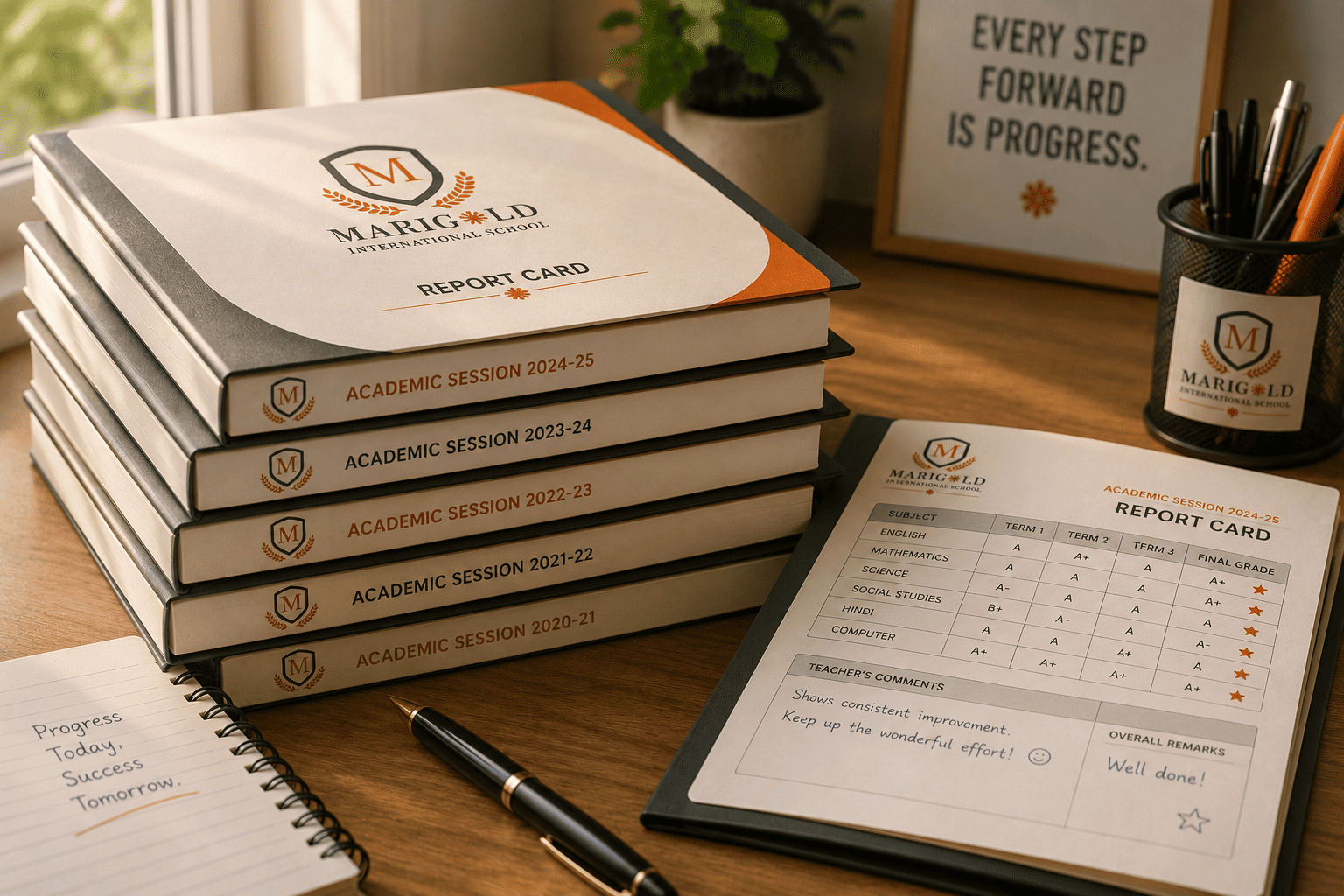
Why Report Cards Have Changed, and Why That Matters
Under the National Education Policy 2020, CBSE schools have been encouraged to move toward what’s often called a Holistic Progress Card — a format that captures far more than academic marks, including things like collaborative skills, creative thinking, physical development, and self-awareness.
This shift exists precisely because marks alone tell an incomplete story. A child can score well on a test through memorisation while genuinely struggling to apply that knowledge, work well with others, or manage their own learning independently — none of which shows up in a single subject score.
If your child’s school has adopted this kind of format, it’s worth actually reading the fuller report, not just skimming to the numbers at the top.
What the Numbers Actually Tell You, and What They Don’t
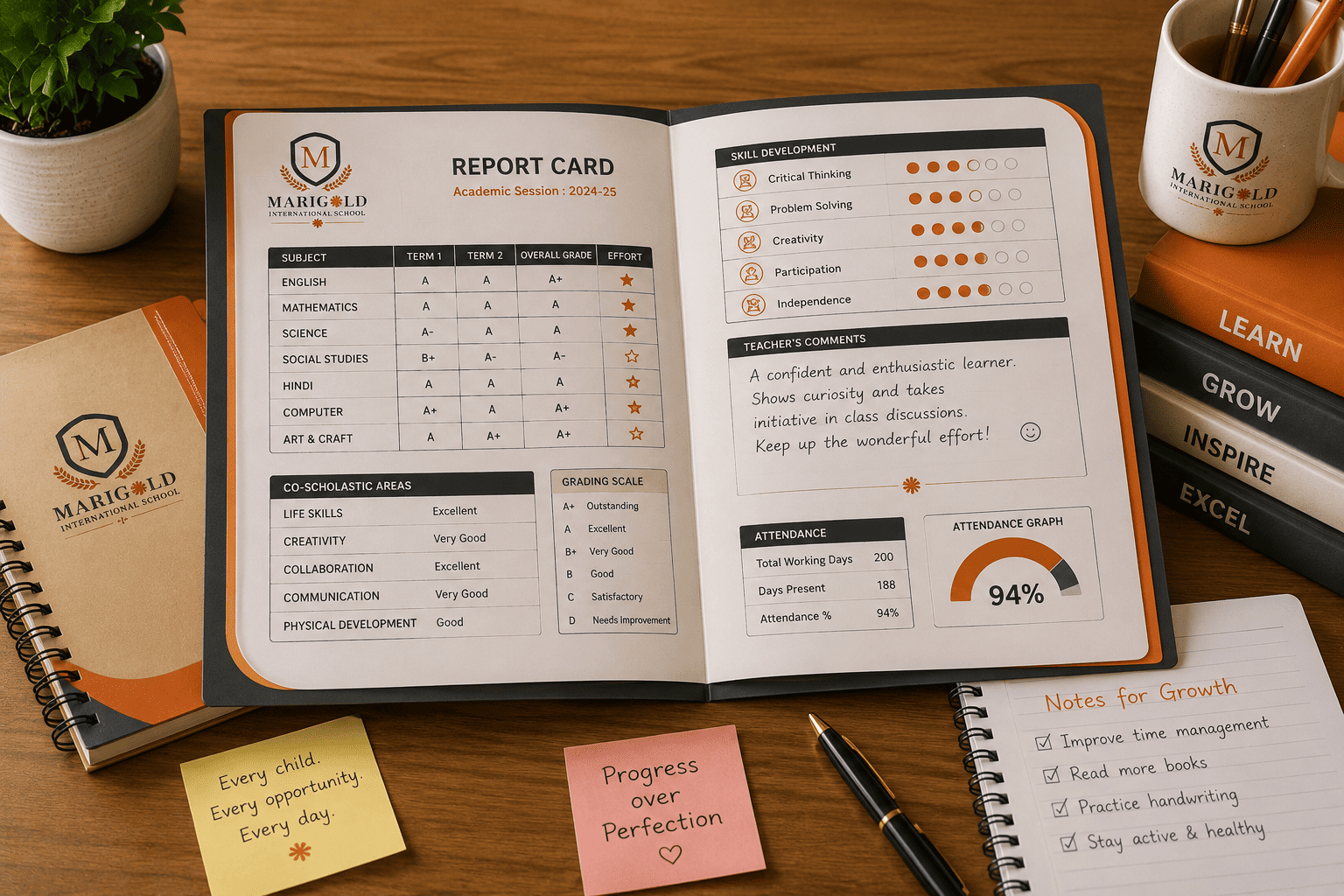
A subject score is a snapshot of performance on a specific set of assessments during a specific period. It’s useful, but it’s also narrow.
It tells you whether your child has grasped the content covered in that term. It doesn’t necessarily tell you whether they understand the underlying concepts deeply enough to apply them in a new context, whether they’re developing genuine curiosity about the subject, or whether their confidence in that subject is growing or shrinking.
A child moving from 65 to 72 in a subject they’ve historically struggled with might represent more genuine progress and effort than a child moving from 90 to 94 in a subject that already came easily to them. Numbers alone, read in isolation, can be genuinely misleading about where real growth is happening.
What to Look for in the Qualitative Sections
This is where the more useful information usually lives, and where most parents spend the least time.
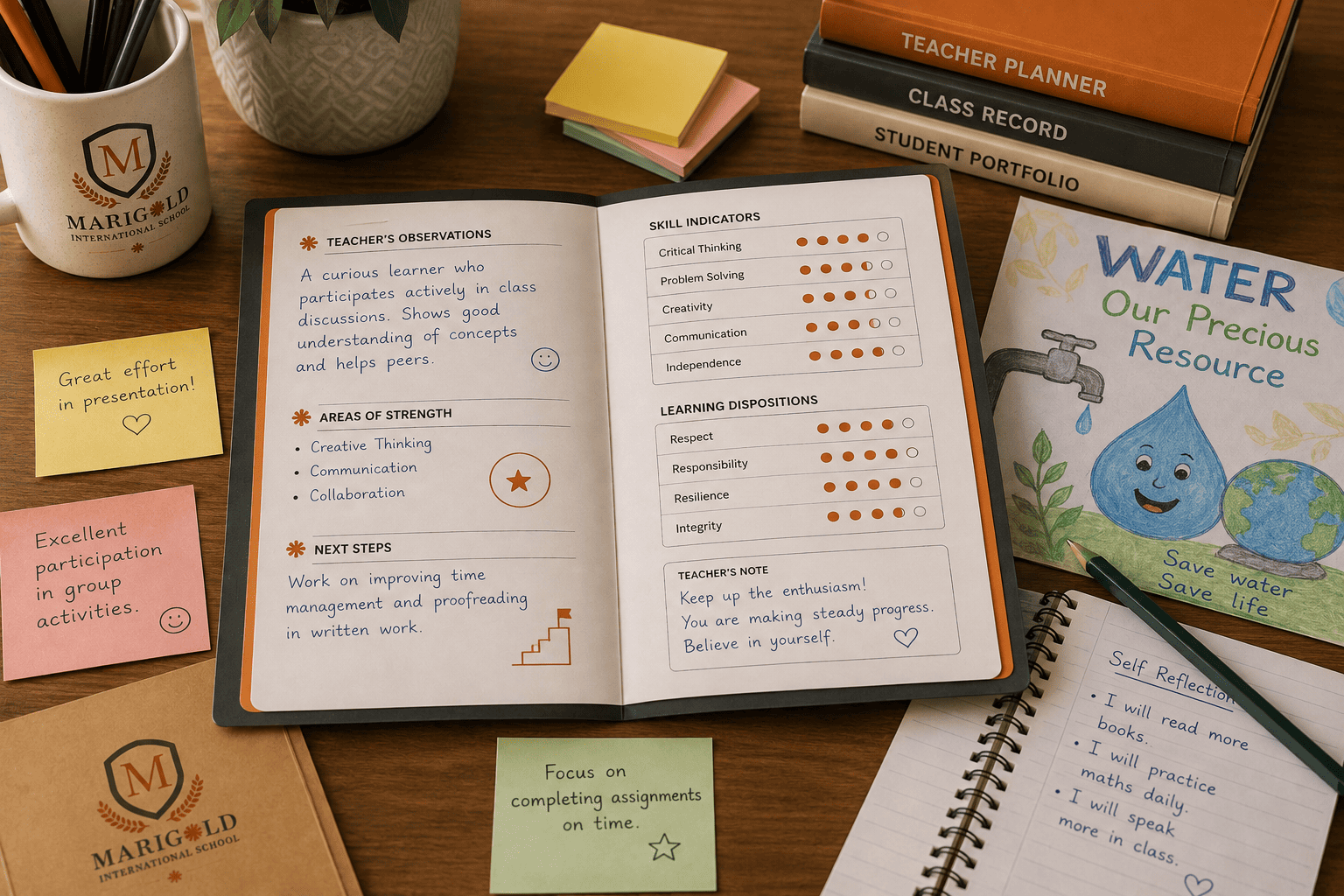
Teacher comments and observations. Look for specificity here. A comment like “participates well in class” is pleasant but not especially informative. A comment like “has become more confident asking questions during group discussions this term” tells you something genuinely useful about growth over time.
Skill and competency indicators. Many holistic progress card formats include ratings or descriptions for things like collaboration, communication, critical thinking, and self-management. These are worth reading as carefully as the subject marks, since they often reveal more about how well-rounded your child’s development actually is.
Attendance and participation patterns. Beyond a simple attendance percentage, look for any noted patterns — consistent lateness, frequent absences around specific days, or strong, consistent participation — that might connect to something worth discussing at home.
Areas flagged for support, however gently phrased. Teachers often use careful, encouraging language even when flagging a genuine area for growth. Phrases like “would benefit from additional practice in” or “is developing” deserve your attention, not just the more glowing language elsewhere in the report.
How to Avoid the Comparison Trap
It’s almost instinctive to measure a report card against a sibling’s, a cousin’s, or a friend’s child’s results. Resist this as much as you genuinely can.
Every child’s report card reflects their own starting point, their own pace of development, and their own combination of strengths and challenges. A comparison rarely produces anything useful and can quietly communicate to your child that their worth is measured against someone else’s performance, rather than their own genuine effort and growth.
The far more useful comparison is your child’s own report against their own previous term. Is there a clear pattern of consistent growth somewhere? Is a previously flagged area showing improvement? These trends, tracked over your child’s own history, tell you far more than any single-term comparison to another child ever could.
Having the Conversation With Your Child
How you discuss a report card with your child shapes how they relate to their own performance and effort for years to come, arguably more than the report card itself does.
Lead with genuine curiosity rather than judgment. “What do you think about this?” or “which part are you most proud of?” opens a real conversation, rather than a defensive one.
For areas that need work, frame it as a shared plan rather than a verdict. “Let’s figure out together what might help with this” feels very different to a child than “you need to do better in this.”
Avoid tying pocket money, privileges, or affection, even implicitly, to specific marks. This can create a transactional relationship with learning that undermines genuine curiosity and intrinsic motivation over time, and children pick up on this dynamic more than parents often realise.
Understanding Grade-Level Differences in Reporting
A Nursery or LKG report card looks very different from a Grade 8 one, and it’s worth understanding what’s developmentally appropriate at each stage rather than expecting the same level of academic detail across every age group.
In the foundational years, reports typically emphasise developmental milestones — fine and gross motor skills, early language development, social-emotional comfort, basic self-help skills — far more heavily than academic subject performance, which is exactly as it should be at this stage.
By the primary years, subject-specific performance starts to feature more prominently alongside continued attention to skills like collaboration and independent work habits. By middle school and beyond, academic detail typically increases further, though a genuinely holistic report should still maintain some attention to non-academic development even as exam-style assessment becomes more prominent.
Understanding this progression helps you calibrate your own expectations correctly — worrying excessively over the absence of detailed subject analysis in a Nursery report, for instance, misses what that report is actually designed to tell you at this stage.
What to Do When Report Cards Trigger Your Own Anxiety
It’s worth a moment of honest self-reflection here too. Many parents carry their own school experiences, positive or difficult, into how they react to their child’s report card, sometimes without fully realising it.
If you notice a strong emotional reaction to a report card, whether it’s excessive worry over a modest dip or an outsized pride in a strong result, it’s worth pausing before your reaction directly shapes the conversation with your child. Children are often remarkably attuned to a parent’s underlying anxiety, even when it’s not stated outright, and this can end up mattering more to how they feel about school than the actual content of the report itself.
A brief pause — reading the report, sitting with your own reaction privately first, and then approaching your child once you feel calmer and more measured — often leads to a far more constructive conversation than reacting in the moment.

How Report Cards Connect to Longer-Term Goal Setting
A particularly useful habit, especially from the middle primary years onward, is using each report card as a starting point for a simple, collaborative goal-setting conversation with your child, rather than treating it as a closed chapter once discussed.
Ask your child what they’d like to focus on or improve in the coming term, based on what the report showed. Their own answer, even if it differs from what you might have chosen, builds genuine ownership over their learning in a way that a parent-imposed goal rarely achieves as effectively.
Revisit this loosely at the next report card, not as a strict accountability exercise, but as a way of showing your child that growth is something tracked and celebrated over time, not just assessed and forgotten each term.
What a Genuinely Strong Report Card Conversation With a Teacher Looks Like
If something in the report card genuinely puzzles or concerns you, it’s worth following up directly with the teacher rather than only discussing it at home.
Ask for specific examples behind any qualitative comment that feels vague or that you’d like more context on. “You mentioned my child is developing collaborative skills — can you give me an example of what that’s looked like this term?” gets you far more useful information than simply nodding along to the written comment.
Ask what the teacher would specifically suggest, at home, to support any area flagged for growth, rather than guessing on your own what might help.
Why Some Schools Do This Better Than Others
Not every school implements holistic reporting with the same depth or seriousness. Some produce genuinely detailed, specific, individualised reports; others use fairly generic, templated language that could apply to almost any child in the class.
This is actually a reasonable thing to ask about directly when evaluating or comparing schools — request to see a sample report card format, and judge for yourself whether the qualitative sections look genuinely individualised or fairly generic and interchangeable.
A school that has taken NEP 2020’s assessment philosophy seriously tends to produce reports where you could tell, just from the written comments, that the teacher genuinely knows your specific child, not a generic description that would fit half the class equally well.
What This Looks Like at Marigold International School
Marigold International School’s approach to progress reporting reflects its broader NEP 2020-aligned curriculum structure, aiming to capture a fuller picture of each child’s development across academics, skills, and personal growth, rather than reducing the term to a set of subject scores alone.
For families evaluating schools with this specifically in mind, it’s worth asking to see an actual sample report format during a campus visit, and comparing how detailed and individualised the qualitative sections appear against other schools on your shortlist.
A Practical Approach for Reading Every Report Card Going Forward
Before opening the next report card, it can help to remind yourself of a simple sequence: read the qualitative sections first, not last. Note what’s genuinely new or different compared to the previous term. Only then look at the numbers, with that fuller context already in mind.
This small shift in order changes the entire tone of how you process and discuss the report, moving the numbers from the headline to simply one data point among several, which is closer to how they were actually intended to be read in the first place.
Frequently Asked Questions
Should I be concerned if my child’s marks drop slightly from one term to the next? A small, occasional dip is common and not usually a cause for concern on its own. Look at the broader pattern across the qualitative sections and over multiple terms before drawing conclusions from a single fluctuation.
How honest are teacher comments on report cards, given they’re often written carefully and diplomatically? Most teachers use encouraging, constructive language even when flagging genuine concerns, so it’s worth reading between the lines gently and following up directly if anything feels unclear rather than assuming the comment is purely positive at face value.
Is it appropriate to request a meeting specifically to discuss a report card, outside the regular parent-teacher meeting schedule? Yes, most schools welcome this, particularly if something in the report genuinely puzzles or concerns you and you’d like more context than the written comments alone provide.
How much should a young child, say in Grade 1 or 2, be involved in discussing their own report card? Keep it light, brief, and positive at this age — a simple conversation about what they enjoyed and one small thing to work on together, rather than a detailed review of every section.
What if the qualitative comments feel generic and don’t seem specific to my child? This is worth raising directly with the teacher or school, since genuinely individualised, specific feedback is one of the more meaningful signs of how closely a teacher actually knows and observes each child in their class.
When Siblings Attend the Same School
If you have more than one child at the same school, it’s worth being especially mindful about how report cards are discussed within the household, since siblings frequently overhear or directly compare each other’s results, regardless of how carefully parents try to keep these conversations separate.
Discuss each child’s report privately where possible, and if a comparison does come up naturally between siblings, gently redirect the conversation back to each child’s own individual progress and effort rather than letting one child’s report become a measuring stick for the other.
This matters more than it might seem, since sibling dynamics around academic comparison can shape family relationships well beyond the school years themselves, in ways that are genuinely difficult to undo once established.
A Final, Honest Note
A report card is a snapshot, not a verdict. It captures one term, assessed through a specific set of methods, and it says as much about the areas being measured as it does about your child’s actual, evolving potential.
Read it fully, discuss it with genuine curiosity rather than judgment, and use it as one useful input among many in understanding how your child is really doing, not the single defining measure of it.
One last practical tip: keep old report cards, even briefly reviewing one from a year or two back before reading the newest one. Growth is often far more visible over a longer stretch of time than it is between just two consecutive terms.
Bringing It All Together
The shift toward holistic, NEP-aligned reporting reflects a broader, genuinely positive change in how Indian education thinks about measuring a child’s growth — moving beyond a narrow focus on marks toward a fuller picture of who a child is becoming, not just what they currently know.
Reading a report card well, and discussing it well with your child, is a skill worth building deliberately over the years, since it shapes not just this term’s conversation but your child’s long-term relationship with learning, effort, and their own sense of capability.
Is it worth discussing the report card with my child even if they seem uninterested or reluctant to engage with it? Yes, though keep it brief and low-pressure rather than forcing a long conversation. Even a short, genuinely curious exchange models that report cards are worth reflecting on together, a habit that tends to make future conversations easier as your child grows more comfortable engaging with feedback about their own progress. Over time, these small, repeated conversations build a child’s comfort with reflecting honestly on their own strengths and growth areas, a skill that serves them well far beyond the school years themselves.