


Every year, around the same time, the same conversation starts up again in every South Bangalore parent WhatsApp group: whose child’s school bus got stuck near Kengeri last year, whose campus flooded near the gate, whose transport app just stopped updating for forty-five minutes while the rain came down.
Monsoon season is not a minor inconvenience for schools in this city. For families across Kengeri, Uttarahalli, RR Nagar, and the Mysore Road stretch, it’s a genuine annual stress test of a school’s infrastructure, transport planning, and communication.
This is a good time, before the worst of the season sets in, to actually ask your child’s school — or a school you’re still evaluating — how seriously they take this. Here’s what’s worth checking.

Why Monsoon Preparedness Deserves Real Attention, Not an Afterthought
Bangalore’s monsoon isn’t a single dramatic storm. It’s weeks of unpredictable, often sudden downpours that can turn a normal 20-minute commute into an hour-long ordeal, particularly on roads with poor drainage or low-lying stretches.
For families near Kengeri, Kumbalgodu, and along Mysore Road specifically, certain stretches are known to see waterlogging during heavy spells, and school transport routes need real planning to avoid the worst of it, not just a hope that the weather cooperates.
This matters because a child sitting in a stalled school bus for over an hour, in the rain, with no clear communication to worried parents, is a genuinely stressful experience — for the child and for you. It’s worth understanding exactly how your school handles this before it happens, not while you’re anxiously refreshing a transport app.
What to Ask About Campus Infrastructure
Before assuming a campus is monsoon-ready simply because it looks well-maintained on a dry day, ask a few pointed questions.
How is the campus drained? A well-designed campus, especially a larger one with proper landscaping, should have visible drainage planning — sloped pathways, covered walkways between blocks, and areas that don’t pool water even after sustained rain.
Are classrooms and corridors protected from leaks? This sounds basic, but older buildings or hastily constructed ones sometimes struggle here, and a leaking classroom roof during an ongoing lesson is more disruptive than it should be.
Is there a covered area for outdoor activity when it rains? If sports periods and outdoor play simply get cancelled every time there’s a drizzle, children lose a meaningful chunk of their physical activity time across the wetter months of the year.
How is electrical safety managed during heavy rain? Ask specifically about backup power, and how the school handles any outage that coincides with ongoing classes or, worse, dismissal time.
What to Ask About Transport Specifically
Transport is where monsoon stress hits hardest for most families, and it deserves the most specific questions of anything on this list.
Ask how routes are planned around known waterlogging points near Kengeri, Uttarahalli, and the Mysore Road corridor. A transport team that has mapped these out in advance, with alternate routes ready, is meaningfully more prepared than one improvising in real time.
Ask how communication works when a bus is delayed. Is there a live tracking app that actually stays updated during heavy rain, or does communication tend to break down exactly when you need it most?
Ask what the protocol is if a route becomes genuinely impassable. Does the school have a plan to hold children safely on campus rather than sending a bus into a flooded stretch, and how quickly are parents informed if this happens?
Why This Matters More for Younger Children
A ten-year-old can handle a delayed bus with some frustration but relative composure. A four or five-year-old, especially one newer to the school, can find an unexpectedly long, dark, rain-soaked commute genuinely frightening.
If you have a younger child, it’s worth asking specifically how the school manages this age group during weather disruptions — is there an attendant on every route who can reassure and manage younger children specifically, not just supervise generally?
The Case for a Larger, Well-Planned Campus During Monsoon Season
This is one of the less obvious advantages of a genuinely spacious, well-designed campus, and it’s worth mentioning here specifically because it rarely comes up until the rains actually start.
A campus with proper covered walkways between buildings, adequate drainage across a larger footprint, and dedicated indoor spaces for activities that would otherwise happen outdoors, handles monsoon disruption far more gracefully than a cramped, multi-storey building with limited covered transition space.
Marigold International School’s 10-acre campus in Kumbalgodu was planned with this kind of space in mind — genuine advantage during the wetter months, when children moving between blocks need real weather protection, not just a quick dash across an open, exposed courtyard.
What a Well-Prepared School’s Communication Should Look Like
Beyond infrastructure and transport, communication is the third pillar of genuine monsoon readiness, and it’s often the most revealing to test directly.
A well-prepared school typically sends proactive updates before a known heavy spell — adjusted pickup timing, early dismissal notices, or transport route changes — rather than leaving parents to figure it out only after a delay has already started.
Ask how the school communicated during last year’s worst weather week, if you can find out from current parents. Specific, remembered examples tell you far more than a general promise of “we keep parents informed.”
Packing a Simple Monsoon Kit for School
Beyond what the school controls, there’s a fair amount parents can do at home to make the season easier for their child too.
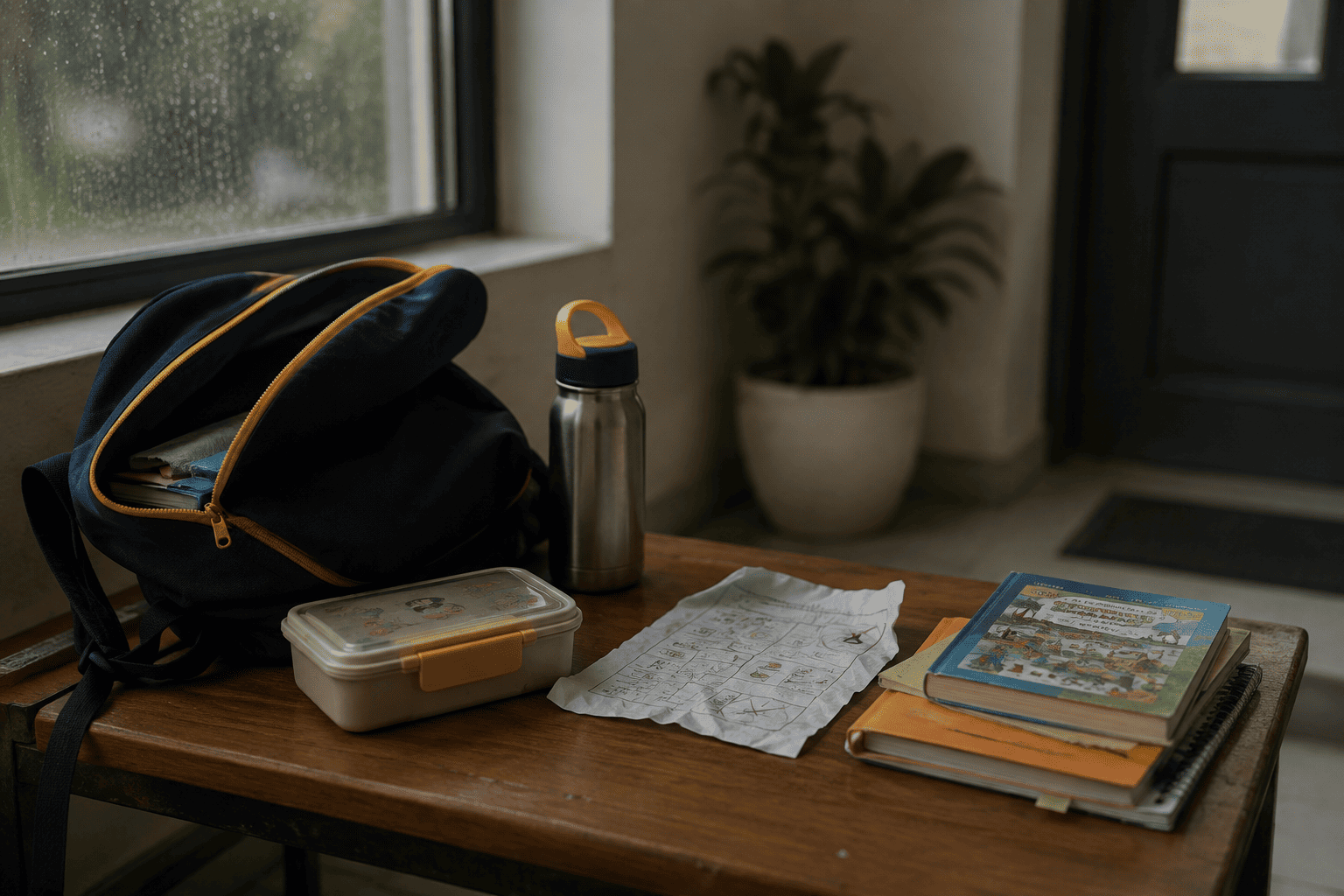
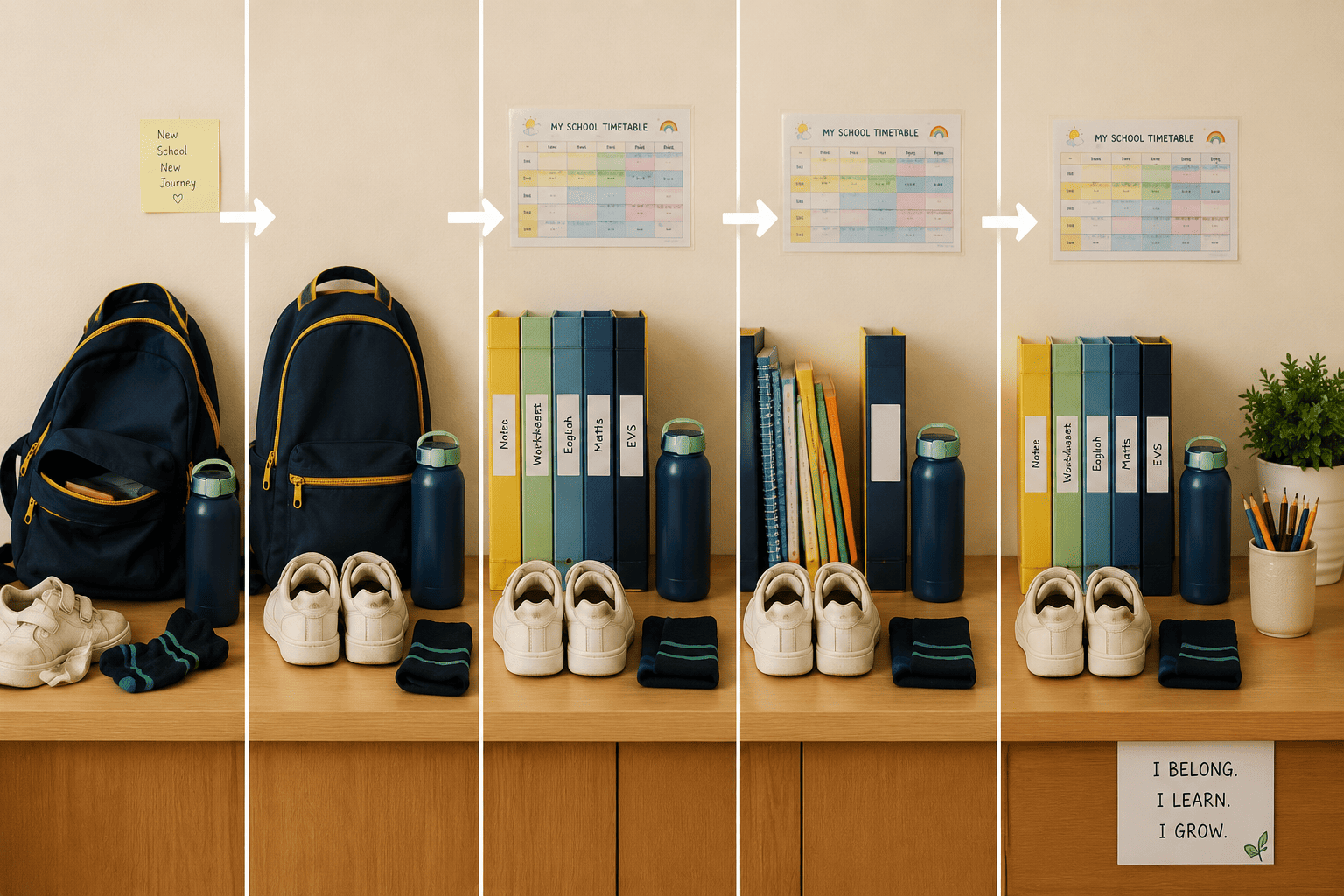
A basic monsoon kit for a school bag can help enormously: a spare set of socks, a small towel, a raincoat or poncho that fits properly rather than a hand-me-down that’s too big, and a plastic sleeve for books and notebooks in case of a sudden downpour during pickup.
For younger children especially, a simple, practiced routine — where the raincoat goes, how the umbrella folds, where wet shoes get placed — reduces the daily friction and the small anxieties that come with an unpredictable season, and most children pick this up quickly once it becomes a habit.

How Monsoon Season Affects Health, Not Just Logistics
It’s worth mentioning the health side of this too, since it’s closely connected to how well a school manages the wetter months. Waterborne and monsoon-linked illnesses genuinely increase during this season, and a school’s approach to hygiene, canteen food safety, and general cleanliness matters more during these months than at other times of the year.
Ask how the school manages hygiene specifically during monsoon season — hand-washing routines, canteen food handling, and how quickly they respond if a stomach bug or seasonal flu starts spreading through a classroom. A school that treats this proactively, rather than reactively once several children are already unwell, is worth noting positively.
Ask too about the school’s medical room protocol during this season specifically — is there a nurse on-site who can quickly assess whether a child needs to go home, and how is that communicated to parents without unnecessary alarm but also without delay.
Talking to Your Child About Monsoon Days
For a younger child, especially one still settling into a new school, an unpredictable rainy day can be genuinely unsettling in ways that are easy for adults to underestimate. A delayed bus, a change in the usual routine, wet shoes and a slightly chaotic pickup — none of it is dangerous, but it can feel overwhelming to a small child without context.
A simple, calm conversation at home — “sometimes the bus takes a little longer when it rains hard, and that’s okay, your teacher will look after you” — goes a long way toward making an occasional delay feel manageable rather than frightening.
A Practical Checklist for Parents
Ask for the school’s specific monsoon transport protocol in writing, not just a verbal assurance
Confirm whether covered walkways connect major buildings on campus
Ask how outdoor activity time is handled during sustained wet spells
Check how communication worked during last year’s heaviest rain days, via current parents if possible
Confirm backup power and safety protocols for electrical systems during storms
Ask specifically about routes near your home — Kengeri, Kumbalgodu, RR Nagar, Uttarahalli — and known waterlogging points along them
What This Looks Like Day to Day for a Well-Prepared School
A genuinely well-prepared school treats monsoon season as a predictable, planned-for part of the academic year, not a recurring emergency. That shows up in small, specific ways: buses that leave a few minutes earlier on forecasted heavy-rain days, a transport coordinator who proactively messages affected routes, and a campus where children can move between classes without getting soaked.
None of this eliminates monsoon disruption entirely — Bangalore’s rains are simply too unpredictable for that. But it makes the difference between a stressful, chaotic day and a manageable one, both for your child and for you, waiting anxiously for an update.
A Word for Parents Currently Shortlisting Schools
If you’re in the middle of evaluating schools right now, ask about monsoon preparedness directly during your campus visit, even if it feels like a minor detail compared to academics or fees.
It’s a genuinely useful window into how a school thinks operationally — schools that have clearly planned for this tend to also be more thoughtful about other operational details that matter day to day, from safety protocols to communication systems more broadly.
What to Do If Your Current School Falls Short Here
If you’re already enrolled somewhere and this year’s monsoon experience has been genuinely stressful, it’s worth raising it directly and specifically with the school rather than just enduring it silently.
Bring concrete examples — dates, delays, communication gaps — rather than a general complaint. A responsive school will take this seriously and adjust; a school that deflects or dismisses a specific, well-documented concern is telling you something worth factoring into your longer-term plans.
Frequently Asked Questions
How much should monsoon preparedness weigh in choosing a school? It’s a meaningful but secondary factor, worth asking about directly, though it shouldn’t override more fundamental priorities like safety, teaching quality, and curriculum fit covered in our companion guide on choosing the best CBSE school in south Bangalore.
What’s a reasonable response time for transport delay communication during heavy rain? Look for updates within 10 to 15 minutes of a known delay, ideally through a live tracking app rather than only a phone call after the fact.
Should schools cancel outdoor activities entirely during monsoon season? Not necessarily — a well-prepared school shifts to indoor or covered-area alternatives rather than simply cancelling physical activity for weeks at a time.
Is a larger campus genuinely better prepared for monsoon season than a compact one? Generally, yes, particularly if it’s been designed with proper drainage and covered walkways, though this depends on thoughtful planning, not size alone — always verify directly rather than assuming.
What should I do if my child’s bus route is affected by waterlogging near Kengeri or Mysore Road specifically? Raise it directly with the transport coordinator, ask about alternate route planning, and confirm what the school’s fallback protocol is if the primary route becomes genuinely unsafe.
Specific Stretches Worth Asking About in South Bangalore
Certain roads in this part of the city are more prone to monsoon disruption than others, and it’s worth knowing which ones affect your specific commute before assuming any given route will hold up.
Low-lying stretches near Kengeri and parts of Uttarahalli have historically seen waterlogging during particularly heavy spells, and the NICE Road corridor, while generally well-drained, can still see slower-than-usual traffic during sustained downpours as vehicles across the city divert onto it.
If you live along one of these stretches, ask your school specifically whether they’ve mapped an alternate route for your area, and how quickly that alternate gets activated once heavy rain is forecast rather than only once a road actually floods.
How This Plays Out at a Larger, Purpose-Built Campus
A school built more recently, with monsoon conditions genuinely factored into the original design, tends to handle this season more gracefully than an older campus retrofitting drainage and covered walkways after the fact.
At Marigold International School, the 10-acre Kumbalgodu campus was planned with covered transitions between major blocks and proper drainage across its grounds, reducing the number of moments during the day when children are genuinely exposed to sudden rain while moving between classes or activities.
For families evaluating schools along the Mysore Road, Kengeri, or Kumbalgodu corridor specifically, it’s worth asking to see this in person during an actual rainy day if your visit timing allows, rather than only touring on a dry, sunny weekend when infrastructure gaps are far less visible.
A Final, Honest Note
Monsoon season will always bring some disruption. Bangalore’s weather is genuinely unpredictable, and no school, however well-prepared, can promise a perfectly smooth few months.
What separates a good response from a poor one isn’t the absence of delays. It’s how quickly and clearly a school communicates when things go sideways, and how visibly they’ve planned for the predictable parts of an unpredictable season.
One last practical tip: if you’re evaluating a school right now, ask specifically to see their written monsoon transport protocol, not just hear a verbal summary. A school that has this documented and ready to share is telling you something real about how seriously they take operational planning, not just academics.
Is it reasonable to ask a school for their specific written monsoon protocol before enrolling? Yes, absolutely. This is a completely reasonable, practical question, and a school’s willingness to share this openly and specifically is itself a useful signal about their operational transparency more broadly, not just during the wetter months of the year.
How can parents help beyond what the school controls? Beyond a basic monsoon kit and a calm conversation at home, staying subscribed to the school’s official communication channels and checking weather forecasts the night before a known heavy-rain day both go a long way toward reducing morning-of stress for the whole family.
Bringing It All Together
Monsoon season tests a school’s operational maturity in a way few other times of year do — infrastructure, transport, communication, and health protocols all get stress-tested simultaneously, often repeatedly across a few months.
Use the questions in this guide, whether you’re evaluating a new school or simply want a clearer picture of how your current one is handling this season, and let the specificity of the answers guide how much confidence to place in the response. A school confident in its own preparation will answer these questions readily and specifically, without needing to deflect toward more general reassurances about “student safety being our top priority.” That specificity, more than any single answer, is what tells you whether monsoon planning is a genuine institutional habit or an afterthought revisited only when something goes wrong.