


By the time most families in south Bangalore get home from the evening commute along Mysore Road or through Kengeri, there’s maybe three or four usable hours left before bedtime. Homework needs doing. Dinner needs eating. And somewhere in there, a child who’s been “on” since 7 am genuinely needs some downtime too.
It’s one of the quieter, more constant sources of friction in family life — not a single dramatic problem, but a daily negotiation that somehow never gets easier. This guide isn’t about eliminating that tension entirely, since some of it is simply part of raising a school-age child, but about building a routine that makes the evening genuinely more manageable for everyone.

Why the After-School Hours Matter More Than They Seem
The few hours between school and bedtime aren’t just a gap to fill. They’re where homework habits form, where screen time patterns get set, and where sleep quality — arguably the single most underrated factor in how a child performs and feels the next day — either gets protected or quietly eroded.
Getting this window right doesn’t require a rigid, joyless schedule. It requires a rough structure flexible enough to bend on a hard day, but consistent enough that your child’s body and mind know roughly what to expect each evening.
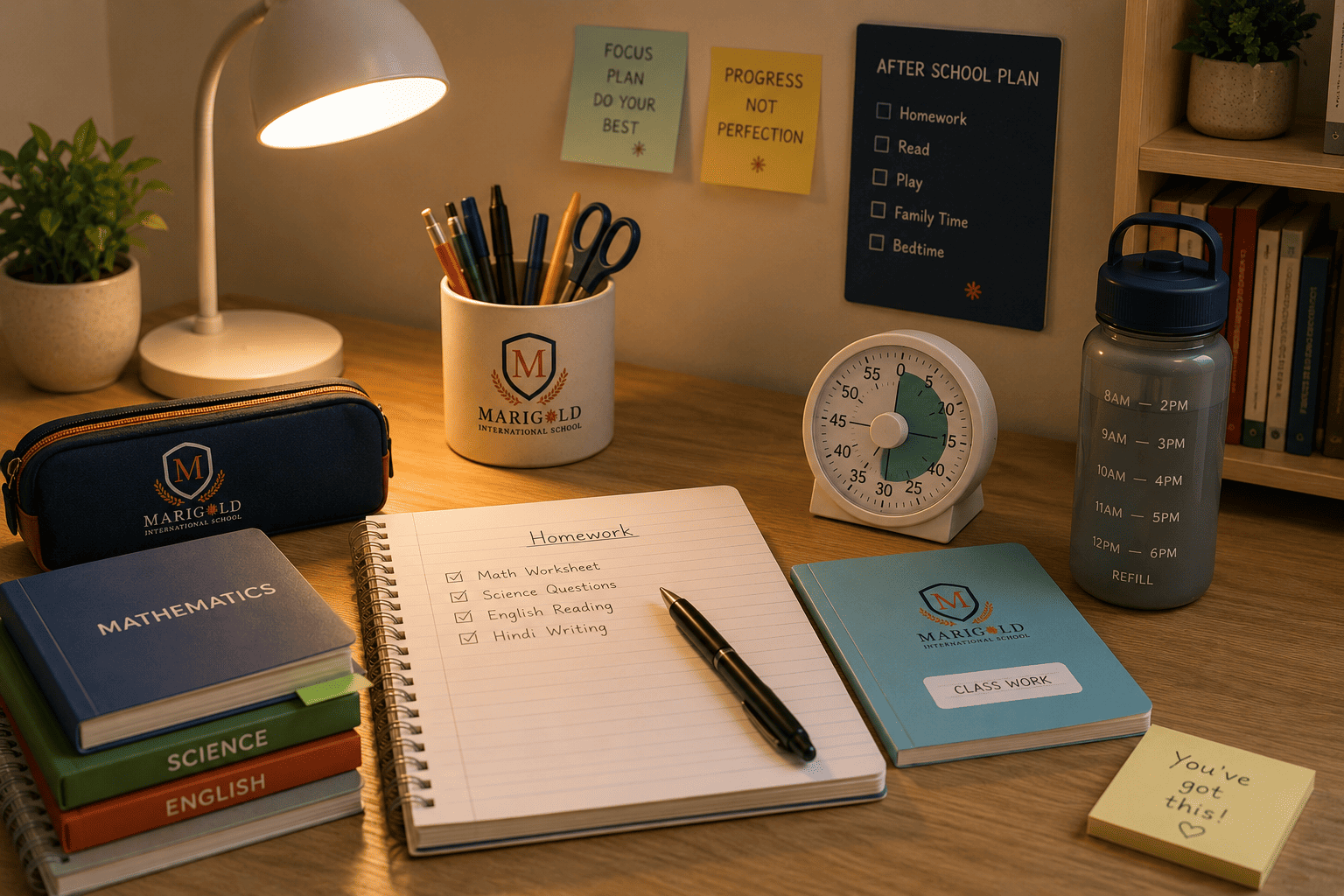
Homework: How Much Is Actually Reasonable
This varies by age and by school, but as a general benchmark, most educational guidance suggests roughly ten minutes of homework per grade level as a rough daily ceiling — so around twenty minutes for Grade 2, forty minutes for Grade 4, and so on, though individual schools and individual children will vary from this.
If homework is consistently taking dramatically longer than this for your child’s grade, it’s worth a direct conversation with the teacher rather than assuming it’s simply the expected norm. Sometimes it reflects a genuine pacing issue in how the homework is set; sometimes it reflects your child needing a bit more support with a specific concept that’s making the work slower than it should be.
A consistent time and place helps more than sheer willpower. A child who does homework in the same spot, around the same time each day, tends to settle into the task faster than one who negotiates fresh each evening about when and where it’ll happen.
Breaking longer homework into chunks, with short breaks, generally works better than one long stretch, particularly for younger children whose sustained attention span is genuinely shorter than an adult’s.
Being available for questions without doing the work yourself is a genuinely difficult balance many parents struggle with. It’s worth resisting the urge to jump in and correct every mistake in real time — a certain amount of productive struggle is part of how learning actually happens, and a teacher seeing where a child genuinely went wrong is more useful than a parent quietly fixing it beforehand.
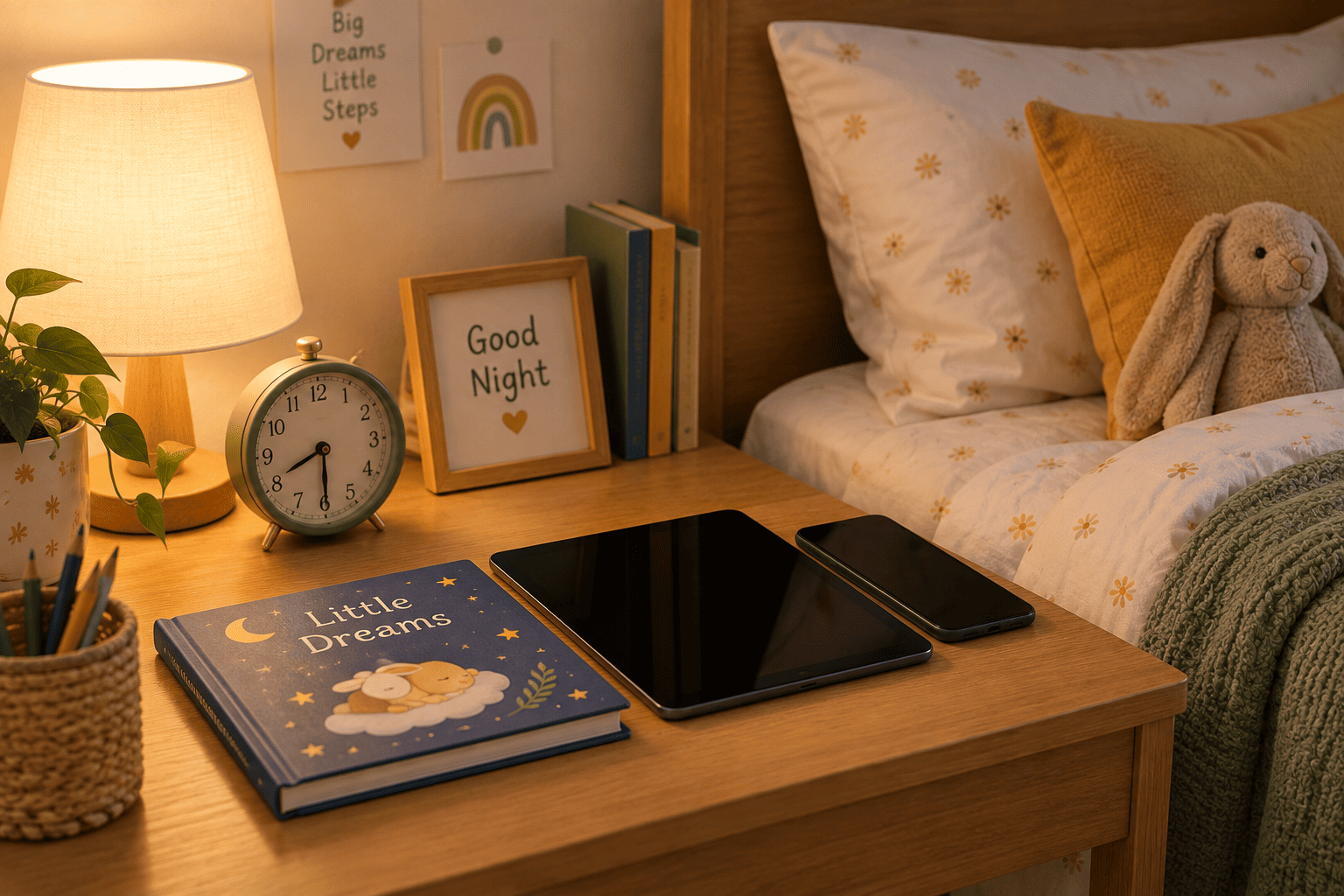
Screen Time: A More Nuanced Conversation Than “Less Is Always Better”
Screen time gets treated as a simple villain in a lot of parenting advice, but the reality is more nuanced, particularly for children attending schools with genuine technology integration built into the curriculum, where some screen-based learning is a normal, valuable part of the school day itself.
The more useful question isn’t “how much screen time” in isolation, but what kind of screen time, and what it’s displacing. An hour of a structured, age-appropriate educational activity is a very different thing from an hour of passive, algorithm-driven video scrolling, even though both count as “screen time” in a simple tally.
Set a clear boundary around screen time before bed specifically. This matters more than almost any other screen time rule, since the blue light and mental stimulation from screens close to bedtime genuinely interferes with how quickly and how well children fall asleep. Most guidance suggests a screen-free window of at least 30 to 60 minutes before bedtime.
Involve your child in understanding the reasoning, age-appropriately, rather than presenting screen limits as an arbitrary rule. Even young children can understand a simple explanation like “screens close to bedtime make it harder for your brain to feel sleepy.”
Model the behaviour yourself where you reasonably can. Children notice, more than parents often realise, when a screen-time rule applies only to them and not to the adults in the house during the same evening hours.
Sleep: The Piece Most Often Sacrificed First
When evenings run long — homework takes longer than expected, an activity runs late, dinner gets pushed back — sleep is almost always the first thing to get compressed. This is understandable, but it’s also the choice most likely to backfire the next day.
Children who are consistently under-slept show measurable effects on attention, mood regulation, and even immune function, not just vague tiredness. A child who seems increasingly irritable, easily overwhelmed, or surprisingly forgetful might simply be running a persistent sleep deficit rather than facing a deeper behavioural or academic issue.
Age-appropriate sleep needs are higher than most adults intuitively expect. Younger primary-age children generally need around ten to eleven hours; even by upper primary and early middle school, nine to ten hours remains the general guidance, more than most households currently manage on a typical school night.
Work backward from a firm wake-up time, not forward from whenever the evening happens to wind down. If your child needs to be up at 6:30 am and needs ten hours of sleep, bedtime needs to be 8:30 pm, and the rest of the evening — dinner, homework, downtime — needs to be planned to genuinely accommodate that, not treated as infinitely flexible with sleep absorbing whatever time is left over.
A consistent wind-down routine signals to the body that sleep is coming, even on nights when the actual bedtime shifts slightly due to circumstances. A predictable sequence — bath, a few minutes of reading, lights out — works better than a routine that varies wildly night to night.
Putting It Together: A Sample Evening Structure
This is a rough template, not a rigid schedule, meant to be adapted to your own family’s specific commute times and constraints.
Arrival home to a short buffer period. Fifteen to twenty minutes of genuinely unstructured downtime — a snack, some free play, simply decompressing — before diving into homework tends to produce better focus than starting immediately.
Homework in a consistent time and place, broken into manageable chunks if it’s a longer load, with a clear sense of when it’s expected to be done rather than open-ended.
Dinner as a genuinely connected family moment where possible, even if brief on busier evenings, since this is often the most reliable window for a real conversation about the day.
A wind-down period free of high-stimulation screens, moving toward the consistent bedtime routine that signals sleep is approaching.
A firm, protected bedtime, treated as non-negotiable in the same way school start time is non-negotiable, rather than the most flexible part of the day.
A Real Scenario Worth Recognising
Consider a common pattern: a generally capable Grade 5 student starts seeming increasingly distracted in class, and homework at home has started taking noticeably longer than it used to, with more complaints and more resistance than a few months earlier.
Before assuming this reflects a sudden academic struggle or a motivation problem, it’s worth honestly auditing the evening routine first. Often, the actual cause turns out to be a slow creep in bedtime — perhaps thirty minutes later than it used to be, compounded gradually over several weeks by a slightly longer evening activity schedule or slightly more screen time than before.
Restoring a firmer bedtime, even without changing anything else, frequently resolves a meaningful portion of what initially looked like a bigger academic or behavioural issue. It’s a useful reminder to check the simplest explanation — sleep — before assuming something more complex is at play.
Managing Sibling Differences in the Same Household
If you have children at different ages or stages, each with their own homework load, screen time needs, and sleep requirements, coordinating a single household routine that genuinely works for everyone takes some deliberate thought.
Younger children generally need earlier bedtimes, which can create a natural, useful structure — an older sibling gets a bit more independent homework or downtime time once a younger one is already winding down for bed, rather than both children competing for the same attention and space during the same narrow evening window.
Where possible, try to protect at least a small amount of one-on-one time with each child individually during the week, even fifteen minutes, rather than only ever managing the evening as a single undifferentiated group activity. Children often open up more readily in these smaller, quieter moments than in a busier, shared family setting.

The Role of Extracurricular Timing in the Overall Evening
Sports academy sessions, art classes, tuition, and other after-school activities all compete for the same limited evening hours, and it’s worth being deliberate about how they’re spaced across the week rather than clustering too many into back-to-back days.
A reasonable rule of thumb: avoid scheduling a demanding physical or academic activity on the same evening as an unusually heavy homework night, if you have any visibility into which nights tend to carry more homework load. Spreading the week’s more demanding evenings out, rather than compounding several difficult factors on the same day, makes the overall week feel more sustainable for both child and parent.
What to Do on the Genuinely Hard Days
Not every evening will go according to plan, and that’s fine. A late activity, an unexpectedly long homework assignment, or simply an off day for everyone happens regularly in real family life.
On these days, it’s worth having a clear sense of which part of the routine you’re willing to compress and which part you’re not. Many families find it more sustainable to occasionally trim homework depth on a genuinely difficult evening — communicating with the teacher the next day if needed — rather than consistently sacrificing sleep to fit everything in.
How a School’s Own Approach to Homework Affects Your Evenings
It’s worth acknowledging directly that a school’s own homework philosophy has a real, practical effect on how manageable your evenings are, not just your own routine choices at home.
Schools that have genuinely embraced NEP 2020’s emphasis on reduced rote homework, particularly in the foundational and early primary years, tend to produce evenings that are meaningfully easier to structure well, simply because there’s less raw volume competing for the same limited hours.
At Marigold International School, homework in the early years is designed to be lighter and more purposeful, in keeping with the school’s broader NEP 2020-aligned approach, leaving more genuine room for the kind of balanced evening routine — homework, downtime, sleep — that supports a child’s overall wellbeing, not just their next day’s assignment completion.
Frequently Asked Questions
How much homework is actually reasonable for a Grade 3 child? As a general benchmark, around 30 minutes daily is a reasonable ceiling, though this varies by school and by child. If it’s consistently taking much longer, raise it directly with the teacher rather than assuming it’s simply expected.
Is all screen time equally harmful before bed? No, though most types of screen use before bed do interfere with sleep onset to some degree due to light exposure and mental stimulation. A screen-free window of at least 30 to 60 minutes before bedtime is a reasonable general guideline.
What if my child genuinely can’t fall asleep even with a consistent routine? A consistent wind-down routine helps most children, but if difficulty falling asleep persists over several weeks despite a reasonable routine, it’s worth mentioning to your pediatrician, since it can sometimes reflect other underlying factors worth checking.
Should weekend routines match school-night routines closely? Some flexibility on weekends is healthy and expected, but keeping wake and sleep times within roughly an hour of the school-night routine helps avoid the sluggish, jet-lag-like effect of a big weekend shift once Monday arrives.
How do I balance extracurricular activities with maintaining a reasonable evening routine? Be realistic about how many activities genuinely fit without consistently compressing sleep or homework time to breaking point, and don’t hesitate to scale back if the current schedule is consistently pushing bedtime later than it should be.
How Commute Time Shapes the Whole Evening Equation
For families across Kengeri, Uttarahalli, RR Nagar, and the Mysore Road belt, the length of the daily school commute has a direct, sometimes underestimated effect on how much usable evening time actually remains.
A child arriving home at 4 pm has meaningfully more room for a relaxed, well-structured evening than one arriving home closer to 5:30 pm after a longer commute, even before homework or activities enter the picture at all. This is worth factoring into your own expectations, and worth being realistic about rather than assuming every family has the same amount of evening time to work with.
If your commute genuinely compresses the evening window significantly, it may be worth prioritising sleep and a shorter, more efficient homework and downtime sequence over fitting in every extracurricular activity that seems appealing, since sleep and homework quality tend to matter more for your child’s overall wellbeing than the sheer number of additional activities squeezed into an already tight evening.
A Final, Honest Note
There’s no version of this routine that works perfectly every single evening, and aiming for that level of consistency will mostly just add stress for everyone involved.
What matters more is the general shape of the week — most evenings following a reasonably protective structure, with room to bend on the genuinely hard days without the whole routine falling apart.
One last practical tip: if evenings feel consistently chaotic despite trying to build structure, sit down on a calm weekend and map out an actual weekly schedule on paper — commute times, activities, typical homework load by day. Seeing it laid out often reveals an obvious pressure point that’s easy to miss when you’re simply reacting to each evening as it comes.
Does a school’s location and campus design actually affect how families manage this evening routine? Indirectly, yes. A school positioned for a genuinely manageable commute, and one with a thoughtful, lighter approach to early-years homework, leaves families with meaningfully more usable evening hours than one that adds a long commute on top of a heavy homework load. This is worth factoring into a school choice, alongside the more commonly discussed academic and infrastructure factors. It’s a quieter, less obvious way that school choice shapes daily family life well beyond the classroom itself. Worth keeping in mind the next time you’re weighing two otherwise similar schools against each other. A good evening routine starts, in part, with a good decision made months earlier at the admissions stage.